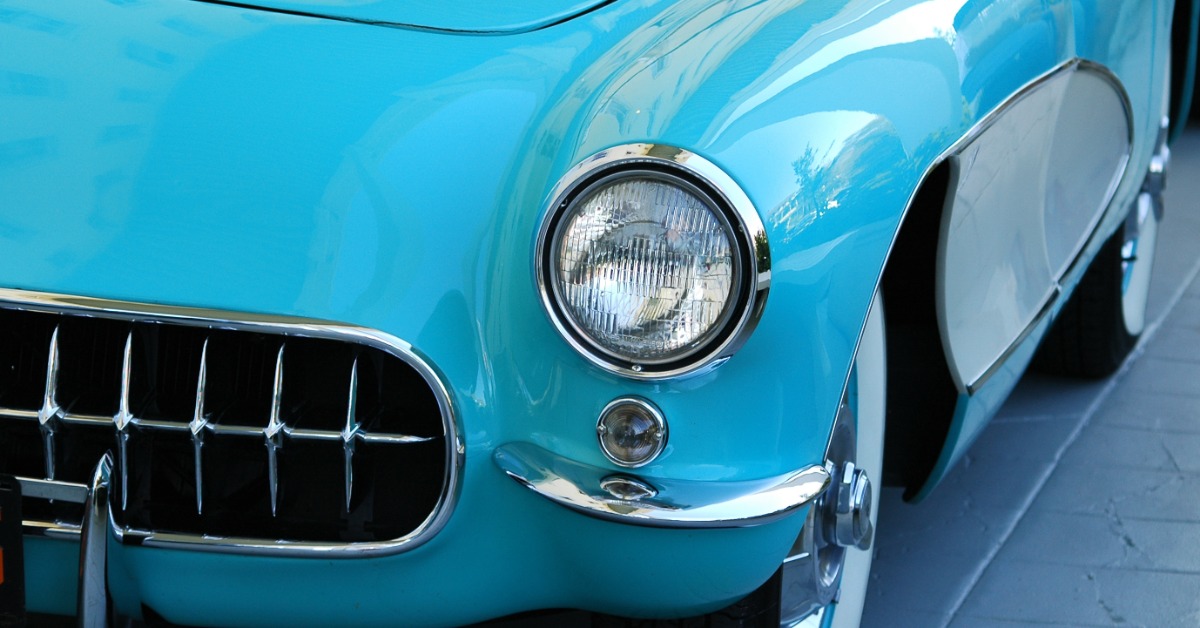
Your Corvette should provide bright, confident visibility at night. If the beams appear dim, yellow, or uneven, it indicates a system issue that requires correction. Lower brightness can compromise safety, slow reaction times, and diminish driving confidence.
Headlight performance usually relies on electrical health, component condition, and correct alignment. If your Corvette’s headlights seem less bright than before, we can assist. Here are some common causes of dim headlights and ways to improve brightness without unnecessary part replacements.
Aging or Failing Headlight Bulbs
Over time, all bulbs tend to lose a bit of their brightness. The light gradually dims well before it burns out. Since this change happens slowly, many owners might not even realize how much their visibility has diminished. Halogen bulbs, which are common in newer models, also fade as they age, and earlier sealed-beam headlights can degrade internally too.
If you notice both bulbs look equally dim, it’s a good idea to replace them in pairs with the right factory-style replacements. Installing new bulbs can bring an instant and noticeable boost to your visibility, making your drive safer and more comfortable.
Corroded or Loose Electrical Connections
Corrosion can increase resistance in the circuit, lowering the voltage reaching the bulb. This decrease in voltage results in dimmer light output. To keep your headlights shining brightly, regularly inspect the connectors, wiring plugs, and terminals for any signs of discoloration or buildup.
Thoroughly cleaning all contact details with an appropriate electrical contact cleaner and ensuring they are securely tightened can prevent corrosion. Remember, even small amounts of corrosion can restrict current flow and reduce brightness, so routine maintenance helps keep your headlights in top condition.
Weak or Inadequate Ground Connections
A solid ground connection is essential for completing the electrical circuit. When a ground strap becomes loose or rust develops between mounting surfaces, the circuit can’t carry the full current needed, which may cause electrical issues. To ensure everything works smoothly, locate the factory grounding points near the radiator support or frame.
Carefully remove any rust or paint that might interfere with metal-to-metal contact and tighten all hardware securely. A proper grounding connection helps restore full electrical flow and can immediately improve the brightness and performance of your lights, making your vehicle safer and more reliable.
Voltage Drop in Aging Wiring Harnesses
Older Corvettes often retain original wiring harnesses. Over decades, internal resistance builds within the wires due to thermal cycling and minor oxidation. Even if the insulation appears intact, voltage loss may occur between the battery and the headlight.
Use a multimeter to measure voltage at the headlight connector while the lights remain on. Compare that reading to battery voltage. A noticeable difference indicates a voltage drop within the harness. Installing a relay system or replacing aging wiring can effectively resolve this issue.
Cloudy or Oxidized Headlight Lenses
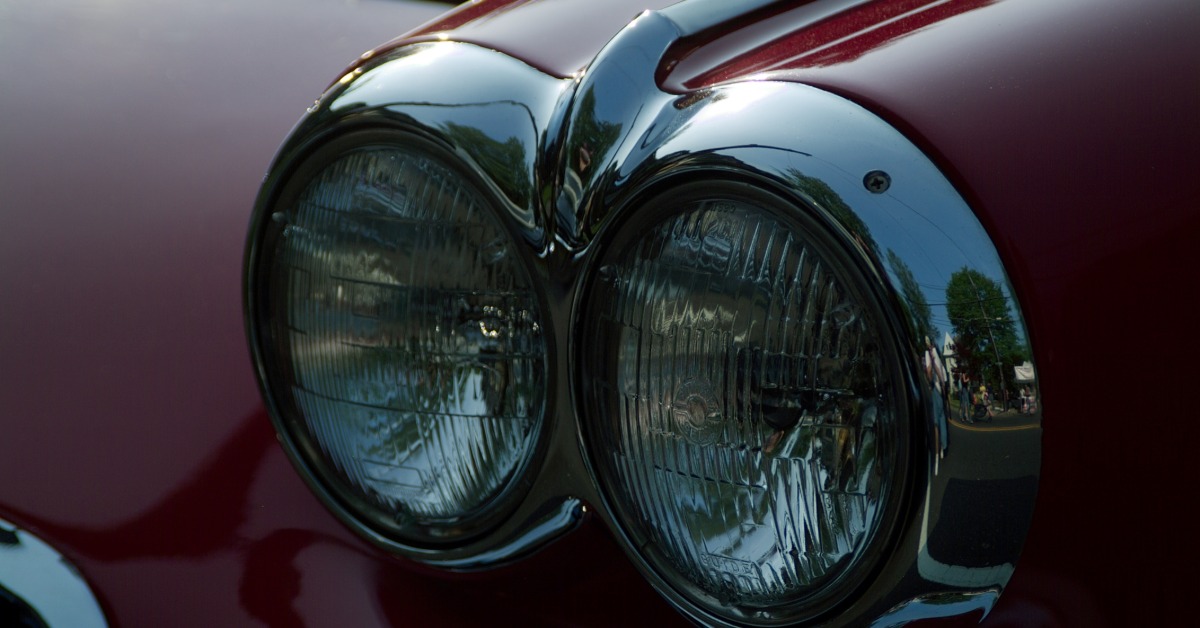
Composite headlight lenses used in later Corvette generations can haze over time. UV exposure degrades the outer layer of plastic, creating a cloudy surface that scatters light rather than reflecting it forward.
Inspect the lens in direct light. If it appears yellow or dull, restore it using a sanding and polishing system designed for automotive lenses. Clear lenses dramatically improve usable light output without requiring changes to bulbs or wiring.
Worn Headlight or Dimmer Switch
In many classic Corvette models, the headlight switch is responsible for handling the entire electrical current for the headlights. Over time, internal contacts in the switch can wear out due to electrical arcing from frequent use, limiting power flow to the headlights and causing dimming or flickering.
If you notice your headlights flicker, appear dimmer than usual, or seem inconsistent in brightness, it’s a good idea to check the switch. Replacing an aging switch with a new one can help restore proper current flow, ensuring your headlights stay bright and stable so that you can drive with confidence.
Charging System Performance Issues
Your headlights depend on consistent system voltage. A weak alternator or failing voltage regulator cannot maintain proper output under load. As the voltage drops, the headlights lose brightness.
Watch for signs such as dim interior lights, slow cranking, or fluctuating gauge readings. Test the battery and alternator under load conditions to confirm proper charging performance.
Headlight Motor and Alignment Problems (Pop-Up Models)
Corvettes equipped with retractable headlights depend on proper motor function and precise alignment to ensure optimal performance. If the headlight door does not fully open, the beam may point downward or be partially obstructed, reducing visibility. When inspecting the headlights, fully open the assembly to thoroughly check for smooth operation.
Make sure both sides sit evenly and lock securely into position. If you notice worn bushings or difficulty locking, replace them or service the motor assembly to maintain proper alignment. Keeping the mechanical components in good condition helps ensure that your Corvette’s headlight projection is bright, focused, and safe for night driving.
Improper Headlight Aim
Even bright bulbs can seem dim if the headlight beam is aimed too low. Over time, suspension wear, front-end repairs, or minor impacts can shift the headlight alignment, reducing effectiveness. To ensure your headlights are properly aligned, park your vehicle on a level surface facing a wall at night.
Measure the beams’ height relative to the ground per the factory guidelines, and adjust as needed. Proper alignment helps direct the light exactly where you need it, improving visibility and safety on the road.
Generation-Specific Electrical Considerations
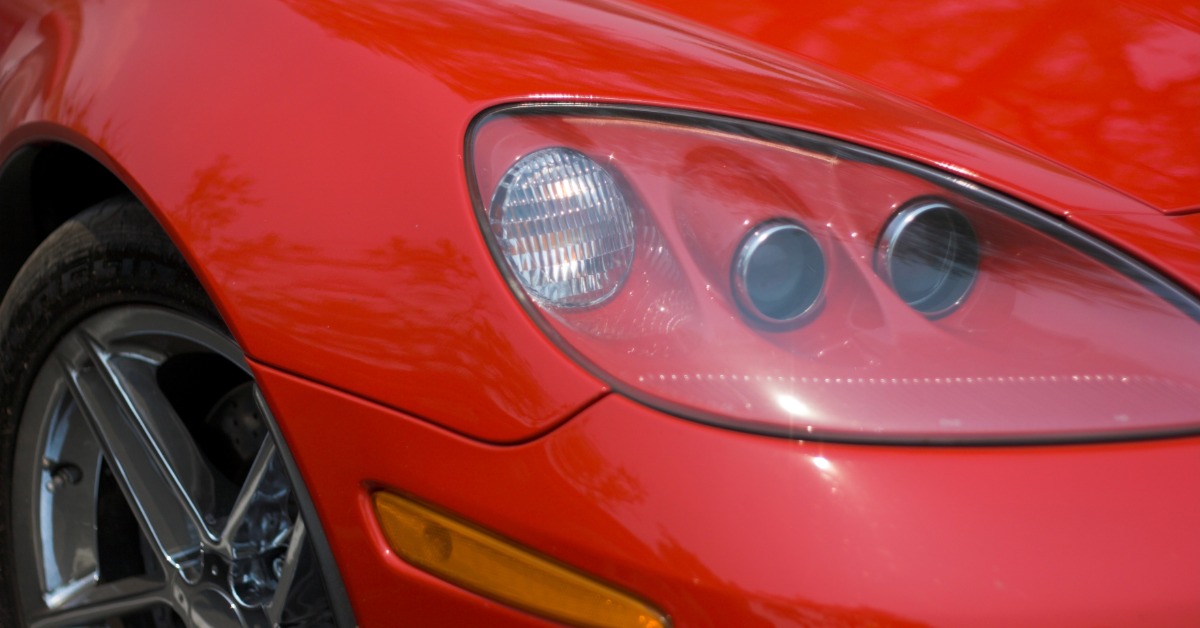
Each Corvette generation features distinct lighting designs. Early C1 and C2 models rely on sealed beams and simpler wiring layouts. Later C4 through C6 generations incorporate composite housing and more advanced electrical systems.
When restoring a classic using 1960 Corvette parts, pay special attention to the original wiring condition and grounding integrity. Age-related resistance commonly affects these early systems. Addressing foundational electrical components often resolves dim lighting without extensive modification.
Preventative Maintenance for Consistent Brightness
Routine inspection prevents most headlight problems. Address small electrical issues before they affect nighttime visibility.
Follow these maintenance practices:
- Inspect connectors annually
- Clean and secure ground points
- Replace bulbs in pairs
- Monitor charging voltage regularly
- Check lens clarity twice per year
Consistent upkeep keeps the lighting system operating at peak performance.
Restoring Full Headlight Performance
When you evaluate the system step by step, the solution usually becomes clear. Electrical resistance, aging components, mechanical misalignment, and charging inconsistencies are the most common causes of dim headlights. Understanding why your Corvette headlights are dim lets you address the root cause rather than guess.
Proper diagnosis restores both safety and driving confidence. With clean connections, solid grounds, healthy wiring, and correctly aimed headlights, your Corvette will once again deliver the strong nighttime visibility it was engineered to provide.
Speak Your Mind